

Word Search Quest - Puzzles
Blackout Lab
I have always liked word games that are easy to start but still give my attention something useful to do, and Word Search Quest - Puzzles fits that mood well. It is a free word search game from Blackout Lab, built around finding hidden words rather than managing complicated rules, timers, or a large set of systems. I can open it for a short break, solve a few boards, and put it away without feeling that I have committed to a long session.
That simplicity is the main reason it works. The game belongs to the word puzzle category and presents itself as a light form of brain training, but I would describe it more honestly as a relaxing search challenge with a small mental workout attached. The familiar format makes it approachable for children, adults, and anyone who enjoys scanning letters for patterns. At the same time, people looking for deep vocabulary lessons or a highly competitive puzzle experience may find it too straightforward.
The game is free to install and suitable for Everyone, which makes it an easy recommendation for a shared family device or a quick personal distraction. Optional in-app purchases are priced at $1.99 per item. I would not treat those purchases as a reason to begin playing, though; the basic appeal comes from the solving itself, not from buying extra value.
How Word Search Quest feels in everyday use
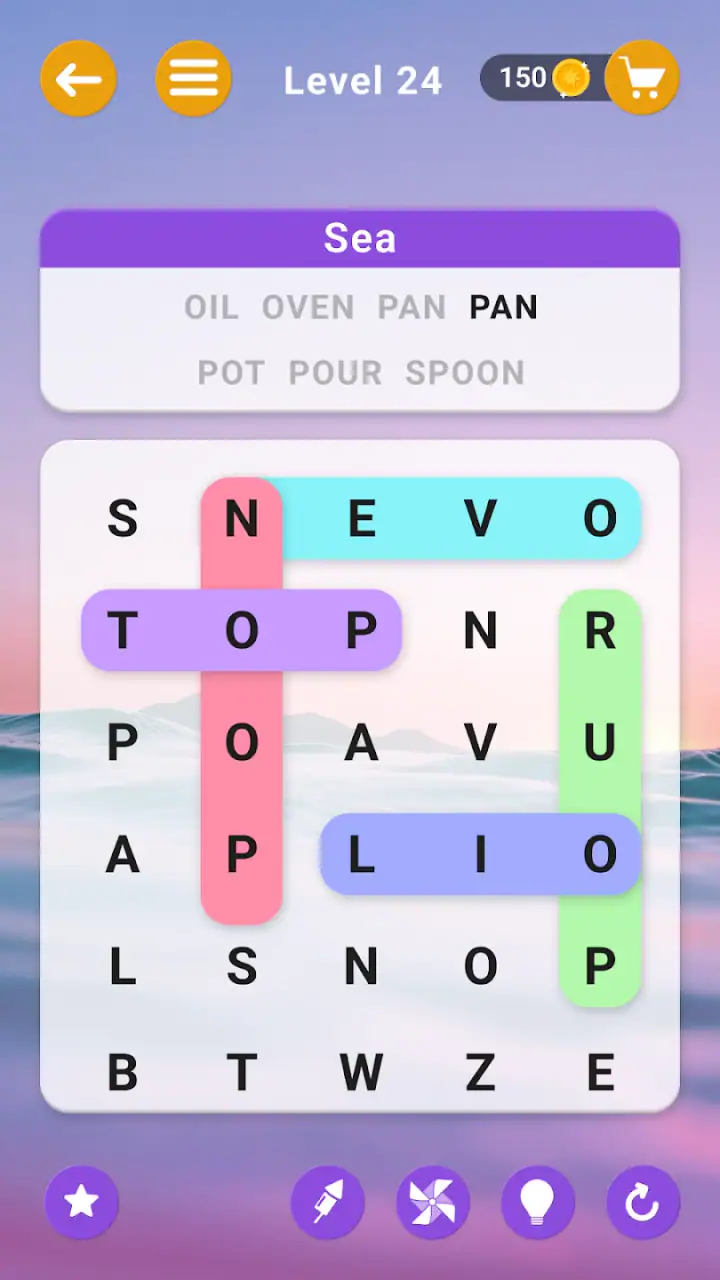
The first thing I notice in a word search game is whether the board feels readable. In Word Search Quest - Puzzles, the central task remains clear: inspect the letter grid, identify the target words, and trace them. That familiar structure means I do not need a tutorial-heavy introduction before enjoying it. It is the kind of game I can hand to someone who has never played a mobile puzzle and expect them to understand the objective quickly.
A realistic use case is a short wait at a bus stop or a few quiet minutes after lunch. I can play one round without needing sound, a story recap, or a complicated account of progress. If I am interrupted, the game suits that stop-and-start habit better than a match-based title that expects uninterrupted concentration. This makes it particularly comfortable for casual players who want a small activity rather than a major entertainment commitment.
Related News

Why WhatsApp Messenger Still Makes Everyday Communication Feel Easy

Jurassic World: The Game Is the Better Dino Tycoon for Strategic Players

Threads in Real Life: Who Should Join, Lurk, or Leave

How SHEIN Turned Shopping Into an Endless Content Feed

How to Make Fortnite Feel Smarter on Mobile

Should You Switch to Microsoft Outlook on Mobile?
The search itself has a pleasant rhythm. I begin by checking the word list, then scan for unusual letters or likely starting points before following possible directions across the grid. That process rewards patience more than fast reflexes. My most useful habit is to avoid reading every row from left to right. Instead, I look first for rare letter combinations and then test whether the surrounding letters can complete a target. This reduces random tapping and makes difficult boards feel more manageable.
There is also a subtle difference between casually spotting a word and solving efficiently. If I mark every possible-looking sequence immediately, I can lose track of the remaining targets. A better approach is to use the list as a checklist, confirm the complete word, and then return to the board with a narrower search. That small workflow is one of the reasons the game can feel more satisfying than a completely passive time-killer.
I would not call the experience educational in the same way as a spelling course. It can improve visual attention and encourage recognition of word shapes, but it does not replace deliberate vocabulary study. Someone learning a new language might still enjoy it as a way to notice familiar words, yet the game should be treated as entertainment with a mental benefit rather than a structured lesson.
Gallery
A good fit for casual puzzle habits
Word Search Quest - Puzzles is strongest when the player wants low-pressure concentration. It does not ask me to memorize a complicated rule set, build a character, or understand a long progression system before the activity becomes enjoyable. That makes it a good choice for adults who prefer calm puzzles, older players who appreciate familiar formats, and families looking for something more focused than endless scrolling.
It can also work as a reset between demanding tasks. I sometimes find that a short visual puzzle gives my mind a different kind of focus, especially when I do not want to watch a video or start a larger game. The important distinction is that this is not automatically relaxing for everyone. Players who dislike scanning dense letter arrangements may find the same quality tiring, particularly when they are already mentally fatigued.
For children, the Everyone rating is reassuring from a content standpoint, but I would still choose boards and play sessions according to the child’s reading ability. A simple interface does not make every word equally easy. Younger players may benefit from playing alongside an adult, turning each puzzle into a shared search exercise rather than leaving them to struggle with unfamiliar vocabulary.
What makes the format work, and where it becomes repetitive
The strength of this game is its narrow focus. Because the objective is instantly recognizable, the challenge comes from observation instead of rules. That also creates its main limitation: if I want variety in the form of trivia, narrative, strategy, or changing mechanics, the basic word search format may begin to feel repetitive. The game is best consumed in small sessions rather than treated as the only puzzle app on a phone.
Compared with a crossword, it demands less interpretation and gives more direct visual feedback. A crossword asks me to retrieve definitions and fit answers into crossing clues, while this game lets me work from visible letters and word targets. Compared with a word-building game, it is less about constructing vocabulary from available tiles and more about locating complete words. Those differences matter: I would choose this title for relaxation and accessibility, but a crossword or anagram game would be better when I want stronger language reasoning.
It also occupies a different space from competitive daily word games. A daily format can create a shared routine and a sense of scarcity, while a word search game is more flexible for repeated short sessions. If my priority is comparing results with friends or discussing one puzzle everyone received, another category may suit me better. If my priority is simply opening a board whenever I have a spare moment, this format is more convenient.
Development, current version, and the practical effect of updates
Blackout Lab released the game on April 26, 2019, and the current version is 2.1.4. I see that version information as useful context rather than a promise of a particular redesign. It tells me that the product has continued to receive versioned development, but it does not by itself guarantee that every part of the experience has changed dramatically. I would judge the current build by how dependable and comfortable the core search activity feels today.
For existing players, a newer version can matter even when the visible game remains familiar. Small changes in a puzzle app may affect stability, screen behavior, loading, or the general smoothness of moving from one board to the next. Those details are easy to overlook when describing a word game, yet they influence whether I want to return to it every day. The current version is therefore worth checking before assuming that an older impression still describes the app perfectly.
The minimum operating system is Android 7.0, which gives the game a reasonably broad compatibility range for Android users with older devices. That is helpful if I am installing it on a spare phone or a family tablet rather than a recent flagship. Still, compatibility is not the same as identical performance. Screen size, device age, and general system condition can affect how comfortable the letter grid feels, so I would test the visual layout during the first few sessions before deciding whether it belongs on a smaller device.
The game’s broad reach is reflected in its store presence: it has passed 100 million installs, with an average rating of 4.8 from around 983 thousand ratings and about 28 thousand written reviews. Those figures suggest that the straightforward format has connected with a large audience, although popularity should not replace personal testing. A player who wants rich mechanics can still dislike a highly rated casual game, while someone seeking a dependable word search may find exactly what they need.
One practical question is whether the game costs anything to begin. It is free, so I can try the core experience without paying upfront. Optional items cost $1.99 each. My advice is to play long enough to understand the normal rhythm before considering any purchase. In a simple puzzle game, a paid item should solve a specific annoyance for me, not become an automatic part of every session.
Another question is whether it is suitable for a mixed-age household. The Everyone rating makes it broadly appropriate in terms of content, and the familiar word search concept is easy to explain. I would still remember that reading skill and patience vary widely. A child may enjoy hunting for short words but become frustrated by longer targets, while an adult may prefer the challenge of searching without help. Adjusting expectations is more important here than expecting the same board to suit everyone equally.
Small techniques that improve the experience
My first useful technique is to divide the board into zones instead of scanning the whole grid repeatedly. I check the top, middle, and bottom areas in sequence, then move on only after comparing each zone with the remaining word list. This prevents the common problem of staring at the same central letters while overlooking an answer near an edge.
My second technique is to search in both directions mentally. A target may be easier to find from its final letter than its first, especially when the opening letter appears many times. I also check diagonal paths early rather than treating them as an afterthought. These habits do not add a new feature to the game, but they make the existing puzzle structure less dependent on random luck.
A third useful approach is session control. If I have been searching for one word for several minutes, I stop and solve another target instead of forcing the same path. Returning with fresh attention often works better than repeatedly tracing identical possibilities. This is especially useful for players who want the game to remain calming; frustration usually comes from turning a casual board into a test of endurance.
These methods also explain why the game can be more than a disposable distraction. It rewards visual organization, selective attention, and the ability to change tactics when a search stalls. Those are modest benefits, but they are real in the moment. I would simply avoid overstating them as formal cognitive training, because the app’s value is primarily in providing an accessible puzzle routine.
Where another option may be better
I would skip this game if I need a strong competitive layer, a story, or a sense of character progression. The word search format gives me a clear task, but it does not automatically provide the emotional variety of a narrative game or the social pressure of a multiplayer title. Players who thrive on rankings may find a dedicated competitive word app more motivating.
I would also look elsewhere if my main goal is to expand vocabulary systematically. A dictionary-based learning app, crossword collection, or language course can offer definitions, explanations, and deliberate review. Word Search Quest - Puzzles may help me notice spelling patterns, but it is not a substitute for feedback about meaning or usage.
There is a similar trade-off for people who want maximum novelty. Anagram, crossword, and word-building games change the mental task more dramatically from round to round. This title’s appeal comes from refinement of one familiar activity, so I recommend it to someone who values ease and repetition rather than constant reinvention.
What I would watch as a returning player
When I revisit a casual game after an update, I pay attention to whether the central interaction remains comfortable on my device. For this title, that means checking the readability of the grid, the ease of selecting words, and whether moving between puzzles still feels frictionless. Those are more meaningful signs of progress than a version number alone.
I would also watch how optional purchases fit into the overall experience. Since the game is free and offers items at $1.99 each, the important question for me is whether the unpaid version remains enjoyable without pressure. A good casual puzzle should let me establish a satisfying routine before asking me to spend money. That is the standard I would apply whenever I consider an in-app purchase.
Finally, I would look for continued attention to compatibility and usability. The Android 7.0 minimum makes the game accessible to many older devices, and preserving that reach is valuable for a simple family-friendly title. If the developer maintains that practical accessibility while keeping the search boards clear and the sessions easy to pause, the game will continue to make sense for its intended audience.
My overall view is positive but specific: this is a dependable word search for short, low-pressure sessions, not a complete replacement for every kind of word game. I like that I can understand it immediately, use it during an ordinary wait, and improve my approach through better scanning rather than faster reactions. I also appreciate that the free entry makes experimenting easy.
I would recommend it to you if you enjoy familiar puzzles, want a quiet way to occupy a few minutes, or need something suitable for a broad age range. I would point you toward a crossword, language-learning tool, or competitive word game if you need deeper clues, structured education, or social rivalry. For everyone in between, Word Search Quest - Puzzles earns its place as a simple, accessible option from Blackout Lab, provided you are comfortable with the repetition that makes its format so approachable.
FAQs for Word Search Quest - Puzzles
What is Word Search Quest - Puzzles?
Word Search Quest - Puzzles is a popular mobile game available on both Android and iOS platforms. It offers a variety of word search puzzles with different themes and difficulty levels, providing hours of entertainment. The app is designed to challenge your vocabulary skills and improve cognitive abilities.
Is Word Search Quest - Puzzles free to download and play?
Yes, Word Search Quest - Puzzles is free to download and play. However, it does offer in-app purchases for additional features and content. These purchases are optional and are intended to enhance the gaming experience, such as removing ads or accessing exclusive puzzles.
What are the main features of Word Search Quest - Puzzles?
The game features a wide range of puzzles with varying difficulties, daily challenges, and themed categories. It also includes a user-friendly interface, hints to assist when you're stuck, and the ability to track your progress. The app regularly updates with new content to keep the experience fresh and engaging.
Are there any ads in Word Search Quest - Puzzles?
Yes, the free version of Word Search Quest - Puzzles includes ads. These ads help support the developers and maintain the app. If you prefer an ad-free experience, you can opt for the in-app purchase to remove ads. This is a common feature in many free-to-play mobile games.
Can I play Word Search Quest - Puzzles offline?
Yes, one of the great features of Word Search Quest - Puzzles is that it can be played offline. This makes it a perfect game for those who want to enjoy puzzles without needing an internet connection, such as during travel or in areas with limited connectivity.
Pros
- Intuitive and easy-to-use interface.
- Wide variety of challenging puzzles.
- Offline mode available for play anywhere.
- Frequent updates with new puzzles.
- Supports multiple languages for global users.
Cons
- Contains ads that can interrupt gameplay.
- In-app purchases for hints and extras.
- Initial levels may feel too easy for experts.
- Limited customization options for themes.
- No multiplayer mode for competitive play.


